How do I figure CLw for sponsons with a deadrise (BDr)
besides 10 degrees? (STBD book)Answer: I'm glad that you've
enjoyed the STBD book. To answer your 1st question, the calculation for water
lift coefficient CLw for varying deadrise (BDr) is very complex, which is why I
didn't put it in the book. The TBDP software allows for the input of
specific sponson deadrise and also a center-pod deadrise (for modified vee
designs), and completes the analysis of performance and stability based on these
and many other inputs. In your 2nd question, you mentioned the question of
induced drag due to edge vortices. This affects both water drag and aero drag. I
think you were referring to aero drag. There are edge vortices associated with
the airflow over the deck surface. The tunnel walls (under the tunnel) reduce
overall vortex shedding significantly, but there remain some affects of air
spilling off the deck into lower pressure areas in the chine and sheer areas.
Back to Top
Answer: A tunnel boat is like
an airplane wing operating close to the ground - or, in what's called
"ground effect". Close "ground" proximity increases lift
coefficients, making more efficient lift/drag ratios for the craft. For example,
reducing the depth of a typical tunnel from 10 inches (at the transom) to 8
inches could improve the aerodynamic lift coefficient by 6% - which means
something like 12% more aerodynamic lift at higher speeds. This means less lift
required by the sponsons, and an ultimately faster top speed (in your case 2-3
mph in the 85 to 90 mph range). Remember that with the tunnel roof closer to the
water, there's also more risk of water interference, and intermittent splashing
and increased drag in heavier water.
Answer: Every pound of weight
means additional horsepower needed to lift it. This is the easiest way to
improve the performance of your boat. If your boat is a high performance 21 foot
modified tunnel configuration that weighs a total 2400 pounds, then the 100
pound weight reduction will mean you will save 3-4% horsepower. This is now
available for better acceleration, and better top speed (in your case as much as
3-4 mph in the 85 to 90 mph range).
Answer: The drag of the cockpit
area can be a complex area to analyze, and also a real source of
aerodynamic drag. You're better off than many if your cockpit and motor fairing
are a well streamlined design already. The difference in aerodynamic drag
between an open cockpit and canopy style cover can be significant. You can reduce
the appendage drag coefficient by 50%, and drag by 75-100 lbs (at top speed) by
using a streamlined canopy (like a F-1X) series jet fighter canopy). This can
translate into as much as 5 mph at top speed (120 mph range).
Answer: Whether you do increase
or not is up to you, but I can tell you what the performance result of the
change will be. A higher deadrise angle will give better performance in rough
waters, but a lower deadrise angle is more hydrodynamically efficient and thus
can generate better acceleration and a faster top speed. The effect is complex,
since the more efficient hydrodynamic lift also means less wetted length,
changing sponson aspect ratio. The difference in going from a 15 degree deadrise
to a 10 degree deadrise angle on conventional sponsons is a hydrodynamic
(sponson) lift coefficient increase of 65%. This can translate into big
performance improvements, even as much as +10 mph in the "over 100
mph" range. You've got to be prepared to accept the stability and handling
degradation that will come with the changes, however. The TBDP, Version 7 does a
great job of analyzing the combined impact of changes like these.
I have a Bass Boat of
tunnel design. How can I calculate the acceleration of my boat design
from 30 mph to 70 mph, measured by elapsed time, so I can compare it to boat
tests of other boats?
Answer:
To accelerate from a given velocity to a higher velocity requires reserve power.
By calculating the power required for a specific design and setup to go 30 mph,
you can then calculate the time increment required to achieve an incremental
increase (say to 31 mph) based on using all the reserve hp your engine has to
give you. This process can be used iteratively to derive an acceleration map or
curve all the way to 70 mph. The TBDP software has a feature that does this analysis for
you.
Answer: The amount
of aerodynamic lift generated by the hull (as a % of total lift) depends greatly
on the tunnel and cockpit configuration. The
AO3100 has ALLOT of POWER, and so it goes really fast. The tunnel is
16" deep (for heavy water), and the cockpit is very open for passengers,
which interrupts airflow over the deck surface. Never-the-less, the AO3100
generates 225 lbs (3% of total lift) at mid velocity (75 mph) and 550 lbs
(7% of total lift) of aero lift at maximum velocity (>100mph). It's a
very well designed hull - and super fast!
The % of LA on
pleasure boats is always lower than it is on higher performance or race-type
boats, as you suggest. As an example, the (AR� Report) performance
analysis of the STV Euro 19' is more a performance boat. This boat
generates 18% LA at mid velocity, and 29% (425 lbs) LA at maximum velocity.
It has a much smaller Height/Chord ratio (more efficient lift) and a fuller,
more aerodynamic deck surface (generates higher L/D ratio). Another
example would be a full race boat, like a Seebold F1 boat, that generates 65%
LA at top speed. This is with a very small Height/Chord Ratio and a
fully canopied cockpit with very aerodynamic deck surfaces. You can see
how these design features contribute to the ultimate performance of different
tunnel boat design concepts. Keep in mind, that the selection of
each design feature is always somewhat of a compromise between top speed,
acceleration capability, stability, comfort, seaworthiness and reliability.
The designer has to match the design features to the performance expectations of
the boat in all operating conditions.
My boat has a chine walk problem. What causes chinewalk and how do I fix it?
Answer: chine walk is pretty common on performance vee-pad hulls. As the hull accelerates, lift increases and the wetted running surfaces that are required to support the hull are reduced (more Speed = more Lift = less Surface). As the speed increases throughout the velocity range, the hull often gets to a point where the lifting surfaces become very much reduced and the hull is now "balancing" on a small area of the vee-portion or the "vee-pad" of the hull. When that surface becomes sufficiently small, it becomes very tricky to "balance" the hull on its vee or pad. The result is a rocking of the hull from side-to-side. This rocking can tend to get a little more extreme with each motion, and so the "balancing" must then be provided by additional driver (steering/throttle/trim) input in order to maintain the hull in a balanced state.
I wrote a full article on 'chine walking' that details the secrets of Chine Walk in performance powerboats- why it happens & how to fix it!
Back to Top
Will my performance vee hull go faster with a 'pad'?
Answer: Here is an article on vee hull and vee pad design that details the speed secrets of vee pad design, vee hull design and performance powerboat design.
Back to Top
How much does my lower unit/outdrive contribute to the drag of my performance hull setup?
Answer: The lower unit profile and configuration and the height adjustment of your outdrive can make a huge difference to the performance of your hull. I wrote a full article on 'How Trim Angle and engine height affects performance'.
Back to Top
My boat seems to do allot of porpoising. How can I fix this?
Porpoising is pretty common...any vee hull (or tunnel hull) can be susceptible to porpoising, depending on design and setup. Flatter bottom vees are more prone to porpoising than steeper deadrise vee hulls, but there are several contributors to the occurrence and any vee hull can find the problem caused by dynamic instability.
The "bouncing" or porpoising comes from a rapid change in the location of the center of Lift as the boat accelerates. The relocation of static weights is one way of dampening the rate of change of the CofL...so it's not always obvious whether to move weight fore or aft in order to cause the "dampening". The solution can be calculated, but we use boat performance software (TBDP®/VBDP®)for that. It's not too difficult for you to find out through testing, whether moving weight fore or aft will help your particular problem.
The resolution to a porpoising problem with a hull design is most always addressed by causing the boat to run with less trim. There are many different ways of achieving this. Here is a full article that I have written on 'Why your boat is porpoising, and how to fix it". Also, here are some notes on S&F chat forum about 'hump zone' and 'porpoising'.
Back to Top
We have a 19ft deep vee hull
(without a center pad). Would the boat go faster with a Pad?
The V-bottom hull is probably the most
common design in modern performance powerboats. The Vee design has a number of
variations, and a near-endless number of modifications can be made to the design
to enhance particular handling characteristics of the boat. A 'High Lift' center
pad is usually very low deadrise or 'flat' and generates much more efficient
Lift than the veed bottom shape. The result of this “extra Lift” is a
dramatically reduced hydrodynamic Drag. Not all hulls will benefit from a center
pad design. For some hull designs, a 'pad' can add top speed to the hull
performance. Usually lightweight and/or higher-powered hulls benefit most from a
vee-pad design. Here is a full article that I have written on 'Why
does a 'pad' make a vee hull faster?'.
Back to Top
I've got TBDP sofware Version
7.x and I love it! Does the new version have more features, and would it
be worth for me to upgrade?
I'm glad that you have found the
TBDP®/VBDP® software so helpful!
The latest TBDP®/VBDP® Version is
. There are SO MANY new features in the new release software! Read
about the NEW TBDP®/VBDP®
here and you can see
a summary of ALL the new features list
here.
AND...the new software comes with the NEW MotorWiz engine wizard that has over
of the latest OEM engine specs. You can order your
TBDP®/VBDP® software
here OR order
your
UPGRADE to your existing TBDP®/VBDP®
software
here.
Back to Top




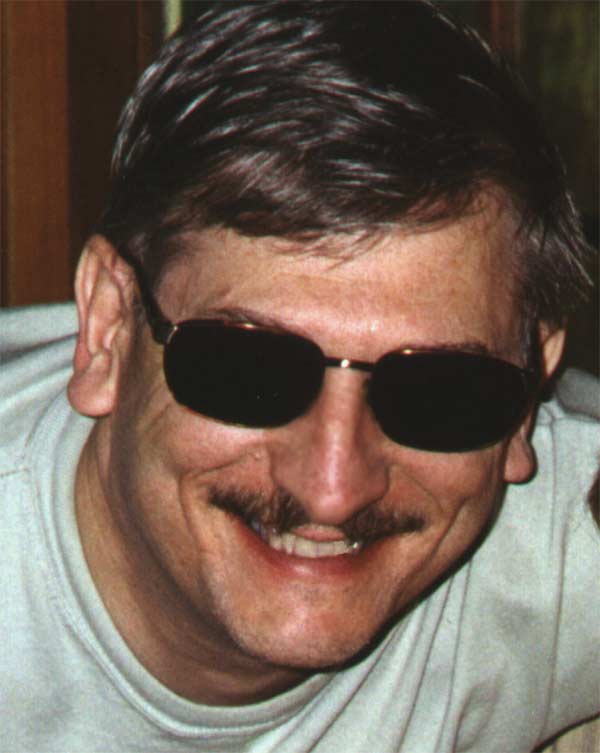 about Jim Russell