|
AR©
advanced VARIABLE DEADRISE analysis for Vee hull and Tunnel hull
performance optimization. |
|
Get complete article by email request:
|
|
Share: |
|
|
Updated:
Dec 13, 2025 |
|
BREAKTHROUGH! |
BREAKTHROUGH!
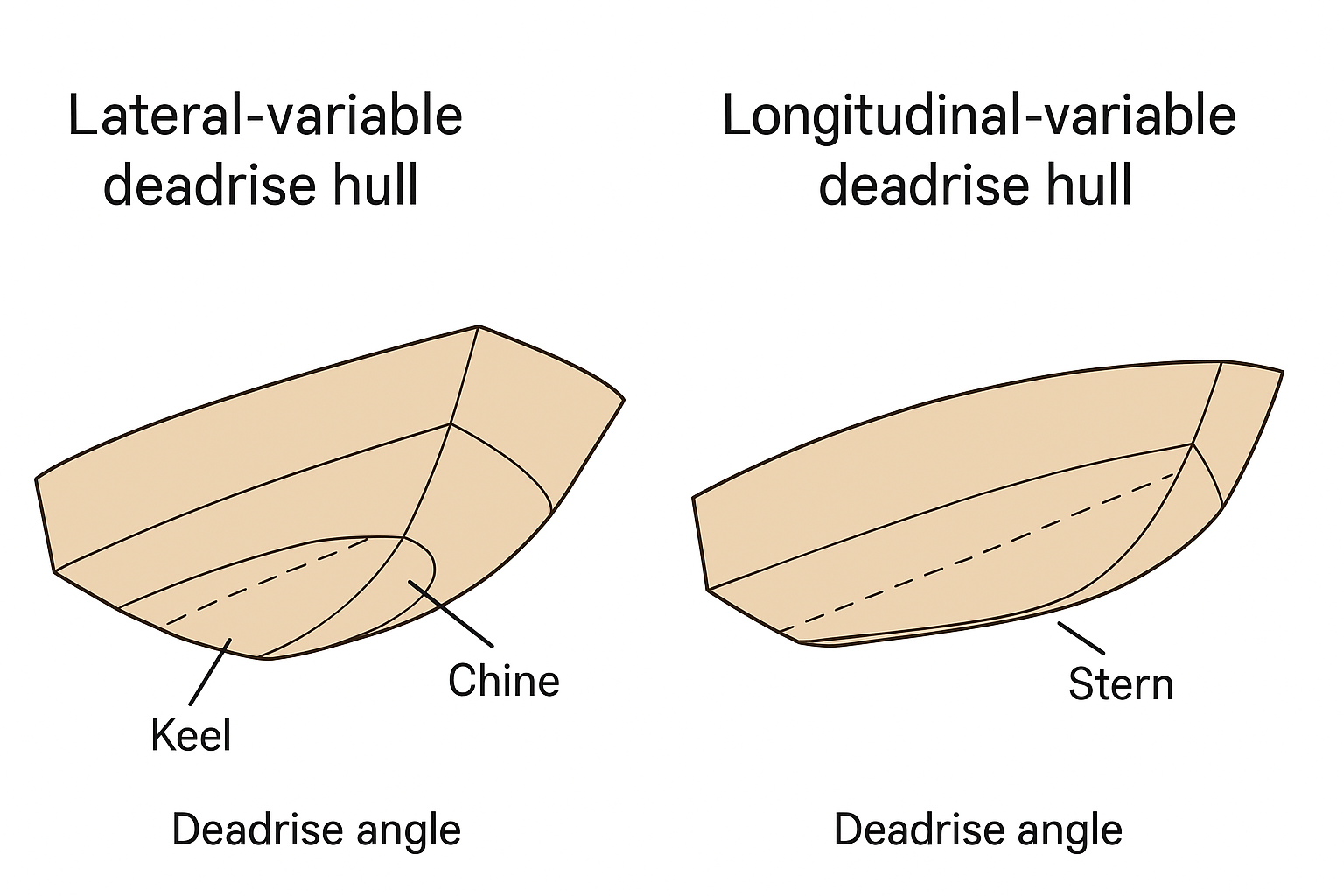
Figure 1 - Lateral Instability can trigger the onset
of
'Chine-Walk' at a predictable velocity.
|
|
Advanced analysis for both
'Variable Longitudinal (warped plane) Deadrise' and 'Variable
Lateral (progressive) Deadrise'.
Background...
Deadrise
is the angle of the planing surface(s) of the hull bottom (say,
20 degrees) compared to the water surface (baseline).
Standard deadrise
design means that the deadrise angle is the same from keel to
chine and from stern to bow.
TBDP/VBDP can account for
complex variation in deadrise angle of running surfaces.
There
are 2 types of variable deadrise
-
where deadrise changes
through the planing length of the running surfaces (longitudinal
variable or warped plane deadrise), or
-
where deadrise angle changes in the
lateral dimension (width) of running surfaces (lateral variable
or progressive deadrise)
Either case or both (combined) can be analyzed
by TBDP/VBDP.
These features
allow to account for a constantly calculated varying deadrise
angles related to the wetted length and/or wetted 'bWidth' of
the planing surfaces through velocity range.
|
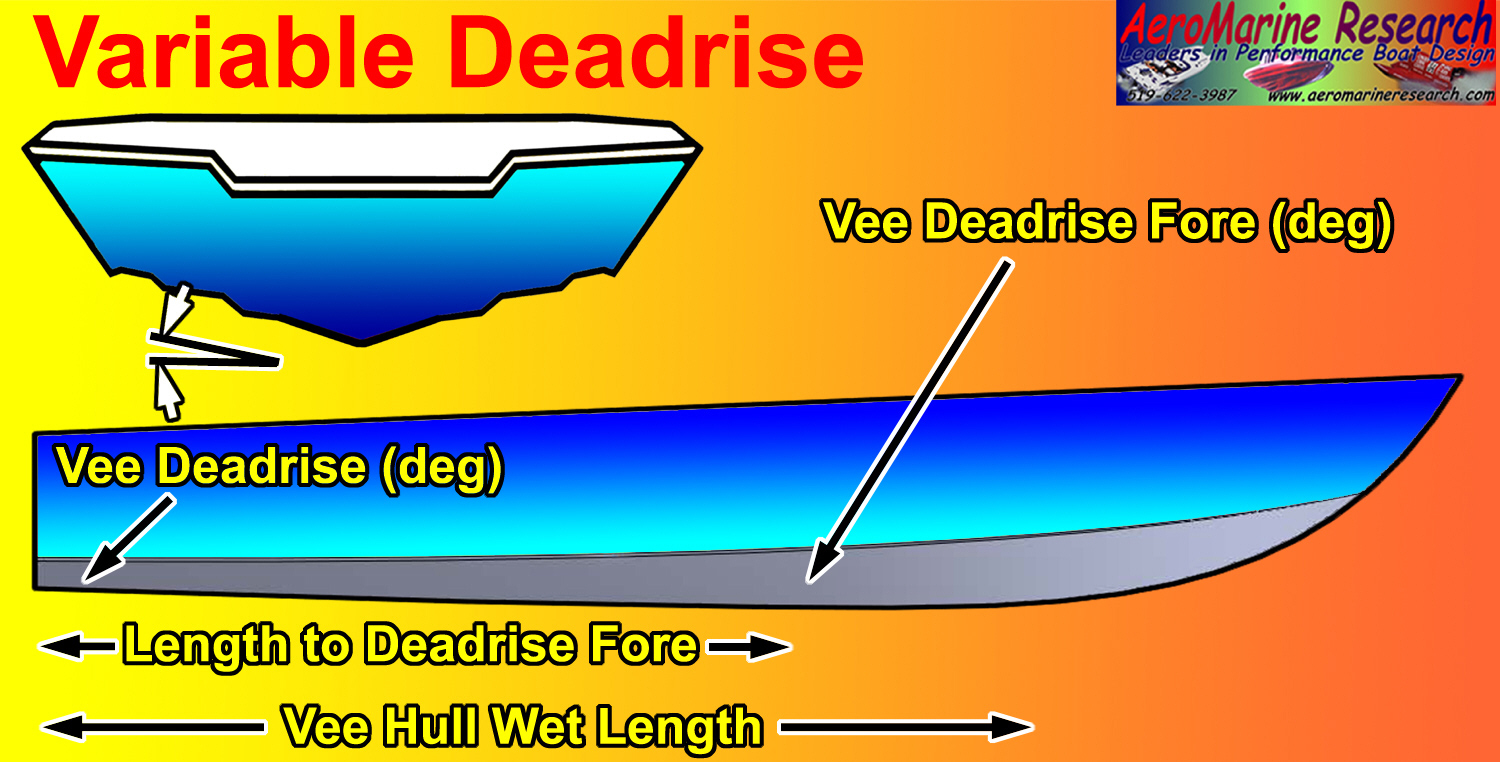
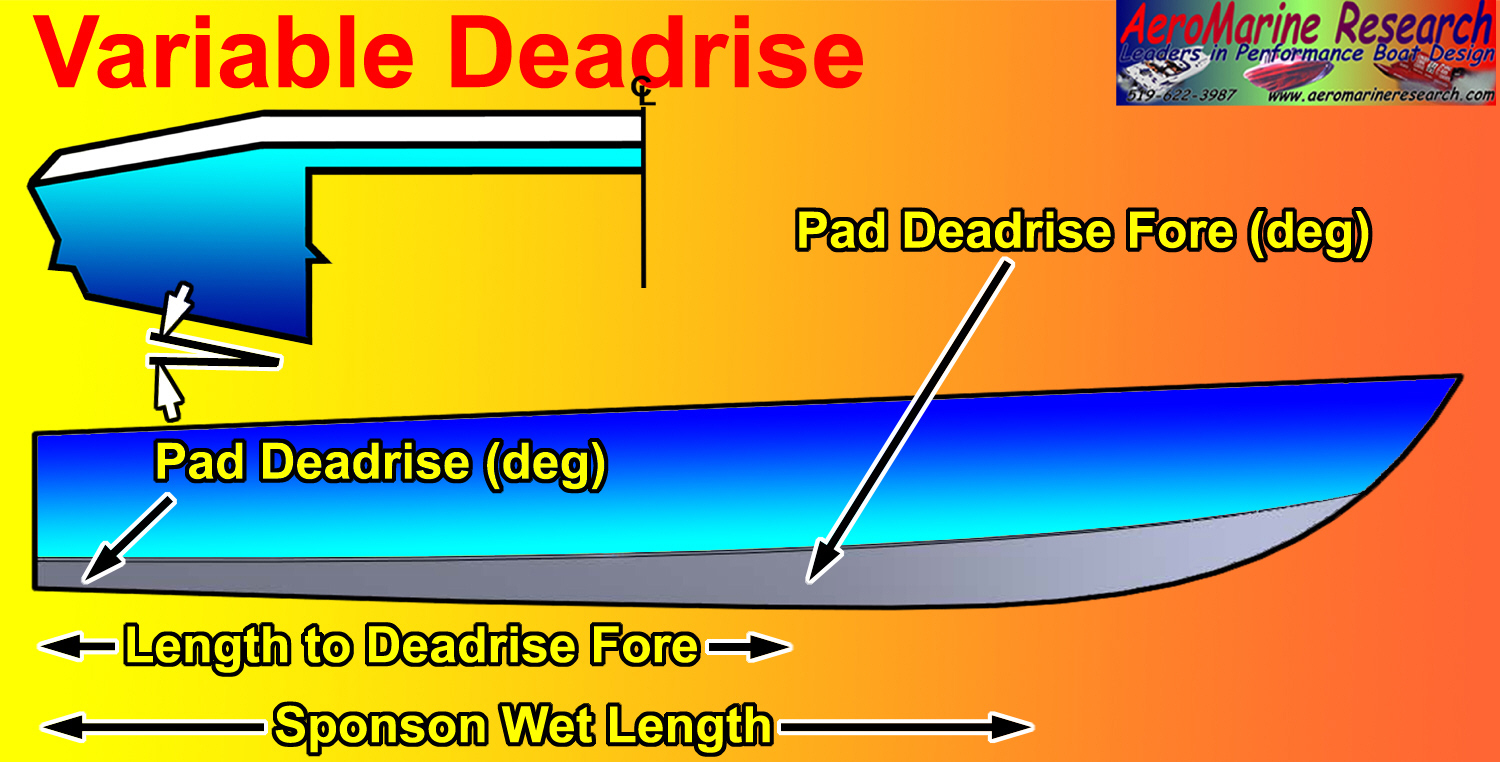
Figure 2 – Variable Deadrise Longitudinal (Warped Plane) -
deadrise changes through the planing length of the running
surfaces
|
|
1) Variable Deadrise Longitudinal (Warped Plane) -
variation in deadrise angle of running surfaces, where deadrise
changes through the planing length of the running surfaces.
This is also called 'Warped Plane' deadrise. So, through the
length dimension of sponson of vee surface, the deadrise angle
changes through the length of the wetted running surfaces.
Longitudinal variable
deadrise hulls (warped planes) vary deadrise along the length of
the hull, with higher deadrise forward that progressively
flattens toward the transom. This design excels at reducing
resistance and enhancing lift at speed by aligning the aft
bottom more favorably with the local flow, while the deeper
forward sections improve wave penetration. However, warped
planes can introduce trim sensitivity, pitch-coupling effects,
and less uniform pressure recovery, requiring careful balance of
CG location and buttock curvature to avoid porpoising or
inconsistent handling across speed ranges.
|
|
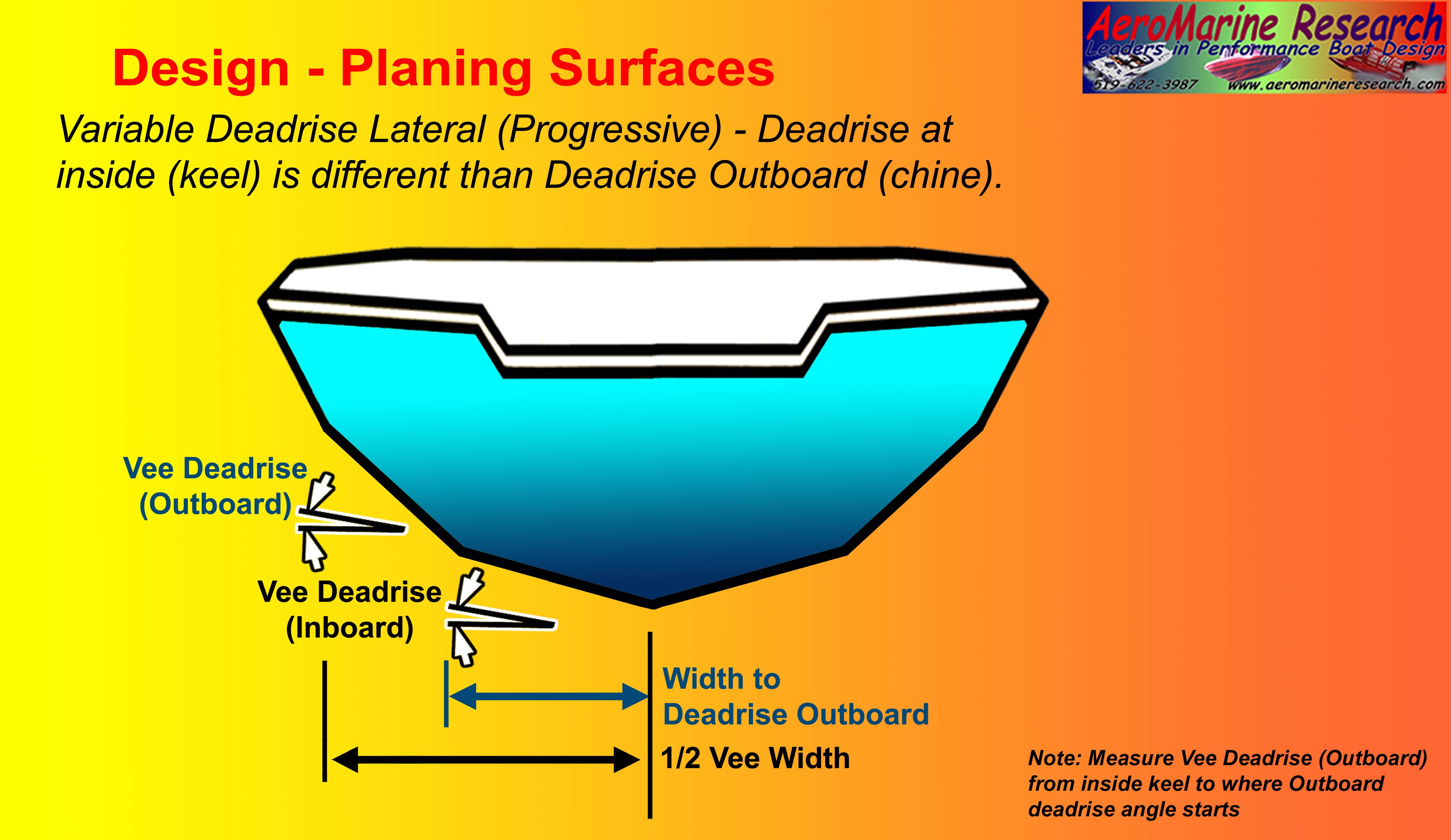
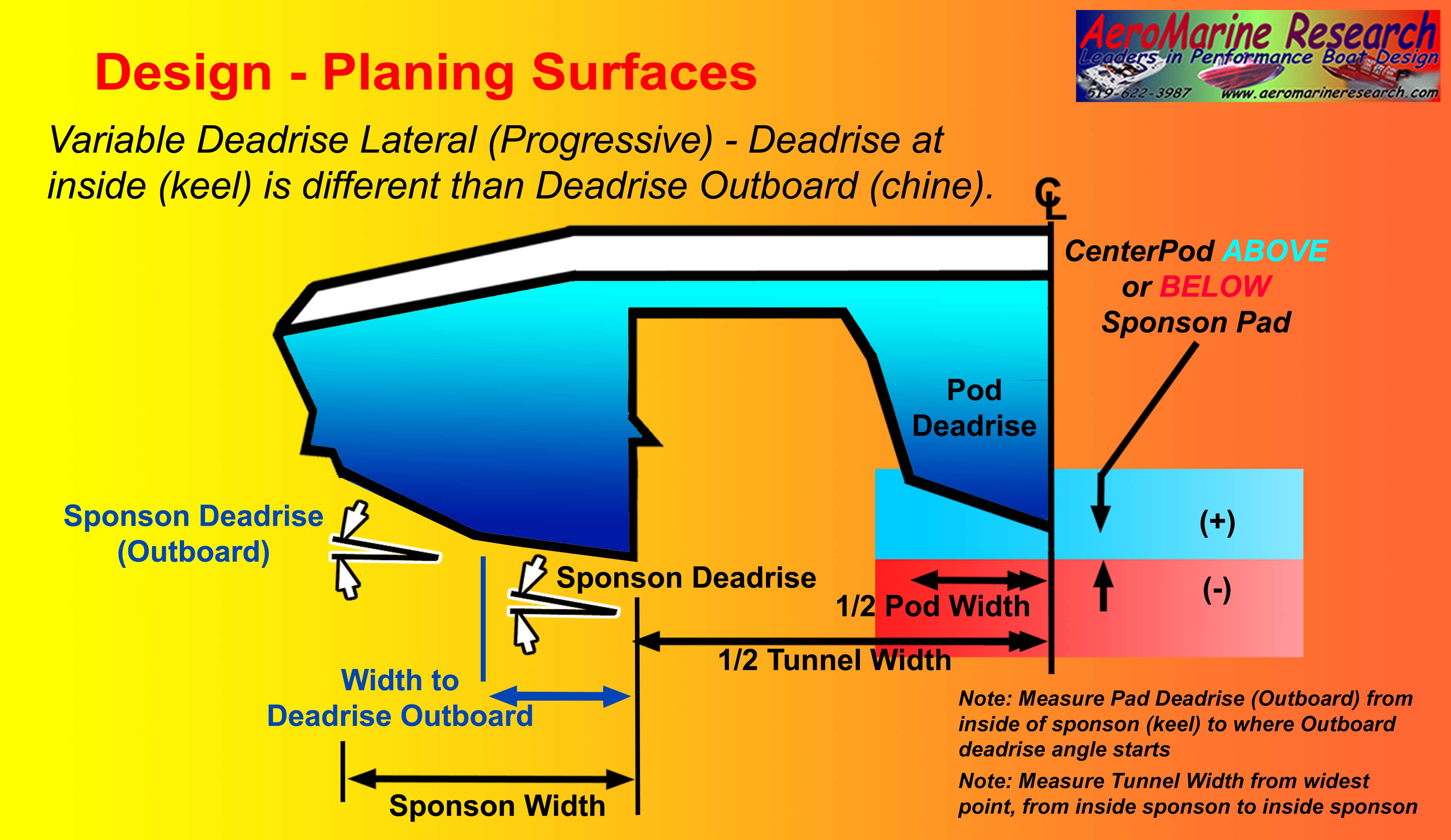
Figure 3 - Variable Deadrise Lateral
(Progressive) - deadrise changes through the lateral
dimension of running surfaces.
|
|
2) Variable Deadrise Lateral (Progressive) -
variation in deadrise angle where deadrise changes in the
lateral dimension (width) of running surfaces. This is also
called 'Progressive Deadrise'. A sponson/vee inboard deadrise
angle is defined and an outboard deadrise angle is defined. So,
across the width dimension of the sponson or vee surface, the
'effective deadrise' angle is variable.
Lateral (Progressive)
deadrise can be designed in 2 ways...
Case 1: Steeper
deadrise at keel, flatter at chines - The deep keel
section cuts through waves smoothly, reducing pounding and
improving ride comfort in rough water. Flatter chines provide
good planing lift and contribute to high-speed stability,
helping the hull plane efficiently. The combination offers a
balanced ride and good lateral stability. However, Lateral lift
is concentrated more outboard, which can create complex flow
patterns and slightly more sensitivity to weight distribution.
Spray deflection may be less uniform, requiring careful chine
shaping.
Case 2:
Shallower deadrise at keel, steeper at chines
- Flatter keel allows quicker planing at lower speeds, with good
initial lift and responsiveness. Steeper chines add roll
stiffness and lateral stability once on plane. This
configuration can feel more agile at moderate speeds. However,
Shallower keel increases the likelihood of pounding in waves,
reducing comfort in rough water. The hull may be less smooth
when encountering chop and could generate harsher impacts along
the centerline.
|
|
Average Effective
Deadrise - TBDP/VBDP
calculates 'average effective deadrise' of wetted planing
surfaces. This unique presentation shows the 'combined'
hydrodynamic effect of variable deadrise surfaces, based on the
portions of the planing surfaces that are actually ontributing
to lift/drag. As speed, trim and loading change the differing
deadrise surfaces become wetted or unwetted - even when
operating with dynamically changing complex variable deadrise
designs, including 'variable deadrise longitudinal', 'variable
deadrise lateral', 'round pontoon', with 1 step, 2 steps or
no-steps with unique deadrise features.
Performance
Analysis - as a hull design changes velocity, trim
angle and wetted length (LWet) and wetted width (bWidth)
also change, which changes the 'effective deadrise' of the
planing surface. Many inter-dependant Lift/Drag contributors -
such as 'longitudinally variable deadrise', 'laterally variable
deadrise', 'vee-pad', 'center-pod', local step combinations -
must be considered in the determination of each surface's wetted
length and bWidth, and hence resulting performance and
stability.
TBDP/VBDP dynamically
calculates the changing wetted surfaces, automatically assessing
the 'active' deadrise portions of wetted surfaces - 'Effective
Deadrise' throughout the velocity range is used for
performance analysis and is reported for the entire velocity
range, in Performance Results and graphically in
Performance Graphs
|
Research results now included in performance
analysis by TBDP©/VBDP©
[more
about AR's research
more about AR's publications and
technical
articles/papers]
|