AR©
advanced Dynamic STABILITY analyses features
for Vee hull and Tunnel hull
performance optimization. |
|
Get complete article by email request:
|
|
Share: |
|
|
Updated:
Jul 29, 2026 |
|
BREAKTHROUGH! |
BREAKTHROUGH!
|
Advanced analysis of all Dynamic
Stability conditions for tunnel hulls, vee hulls and vee-pad
hulls, gives effective prediction of Lateral stability,
Longitudinal Stability, Porpoising Stability, Hump Zone, and
Force-Moment balance . Predicts onset of chine walk, track
rolling, turn hook, bow steer; nose-dive (stuffing),
bow-steer, bow-trip, bow-raise, high bow lift or blow-over;
Porpoising onset, and more. THESE ARE FANTASTIC NEW
TOOLS!
These advancements
are included in newest versions of AR's
TBDP©/VBDP© performance analysis software.
|
|
"AeroMarine's new TBDP software is a total game-changer. The
Stability Analysis tool makes complex engineering data super
simple and easy to act on, so finding and fixing design flaws is
a breeze. Thanks for making such an awesome product!" [Robert
Morgan Perth, AUS] |
|
|
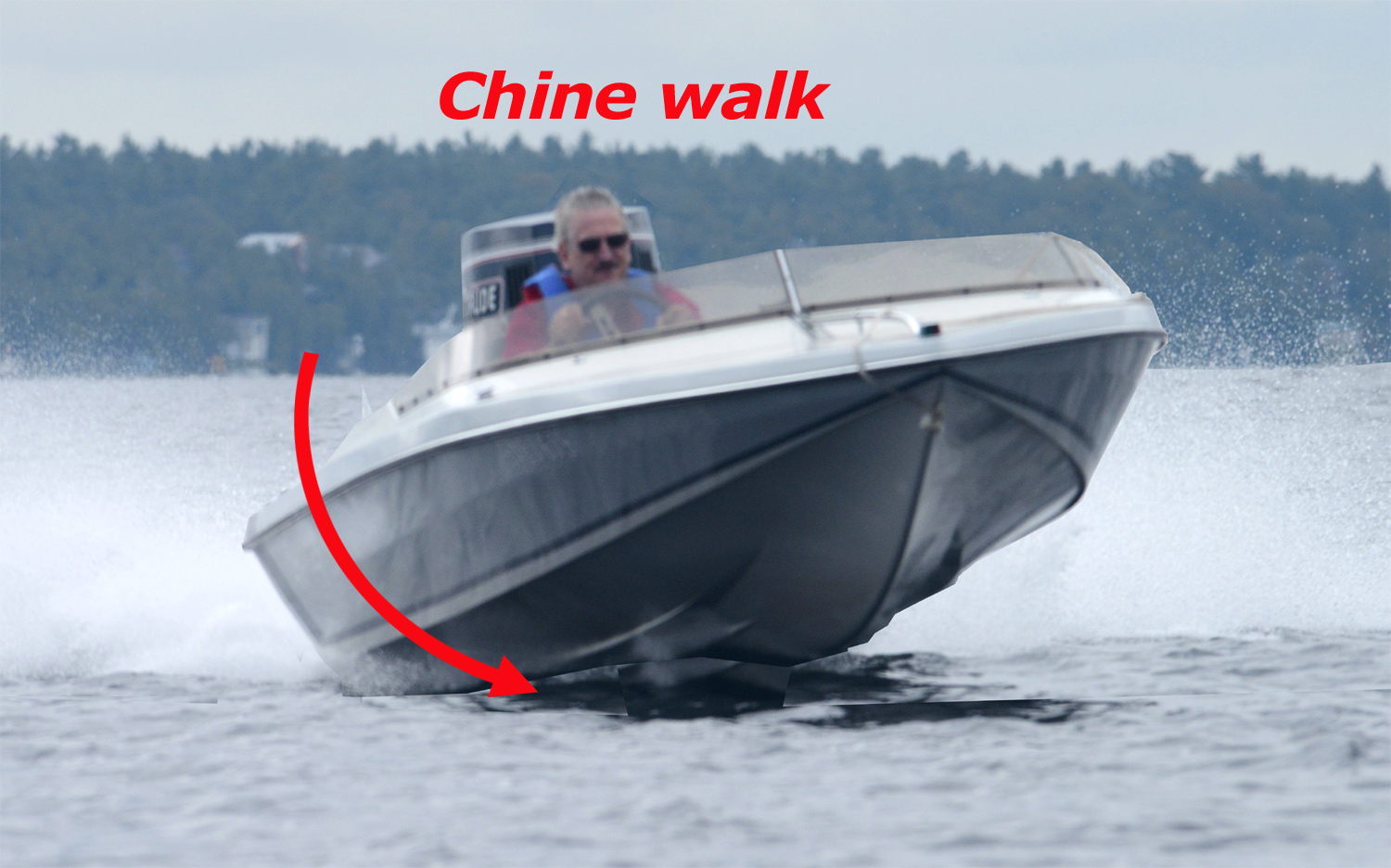
Figure 1 - Lateral Instability can trigger the onset
of
'Chine-Walk' at a predictable velocity. |
|
Lateral
Stability--
Lateral Stability Analysis predicts onset of insabilities
including chine-walk, track-rolling, hook, roll-over,
and more. Lateral instability in high-speed planing hulls is a
dynamic phenomenon that cannot be reliably predicted using
static equilibrium methods or isolated numerical simulations.
Many hulls that appear 'stable' by traditional criteria actually
exhibit growing roll oscillations, chine walk, or loss of
control as speed increases. This occurs because real stability
depends on how roll energy is stored, dissipated, and restored
over time - not simply on whether restoring moments exist at a
given condition. [see more on
Lateral Stability analysis] |
|
|
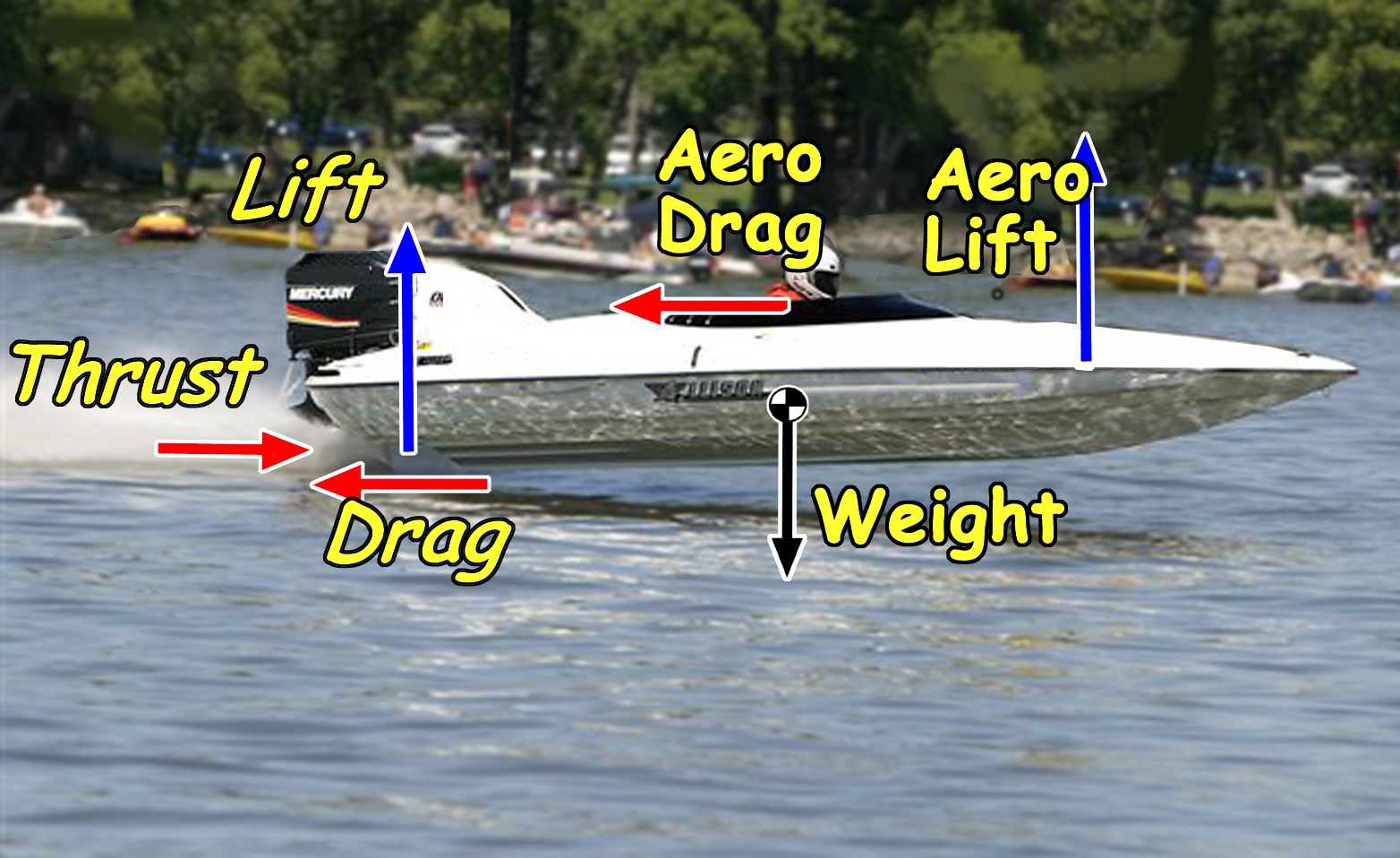
Figure 2 - Dynamic Longitudinal Stability analysis evaluates
restoring quality of the longitudinal force balance across speed
AND operating regions where pitch stability margins are strong,
weak, or changing. |
|
Longitudinal Stability - TBDP/VBDP Longitudinal
Stability Analysis predicts onset of insabilities including
nose-dive (stuffing), bow-steer, bow-trip, bow-raise, high bow
lift or blow-over, and more.
Pitch Stability Beyond
Trim Equilibrium Traditional trim analysis determines the
equilibrium trim angle of a planing hull at each speed. While
necessary, equilibrium trim alone does not indicate whether the
hull will naturally resist pitch disturbances or whether small
changes in speed, trim, or loading may lead to persistent
imbalance or instability. The Dynamic Longitudinal Stability
analysis developed by AeroMarine Research evaluates the
restoring quality of the longitudinal force balance across
speed. It identifies operating regions where pitch stability
margins are strong, weak, or changing, providing designers with
insight that conventional trim solvers do not supply.
[see more on
Longitudinal Stability analysis] |
|
|
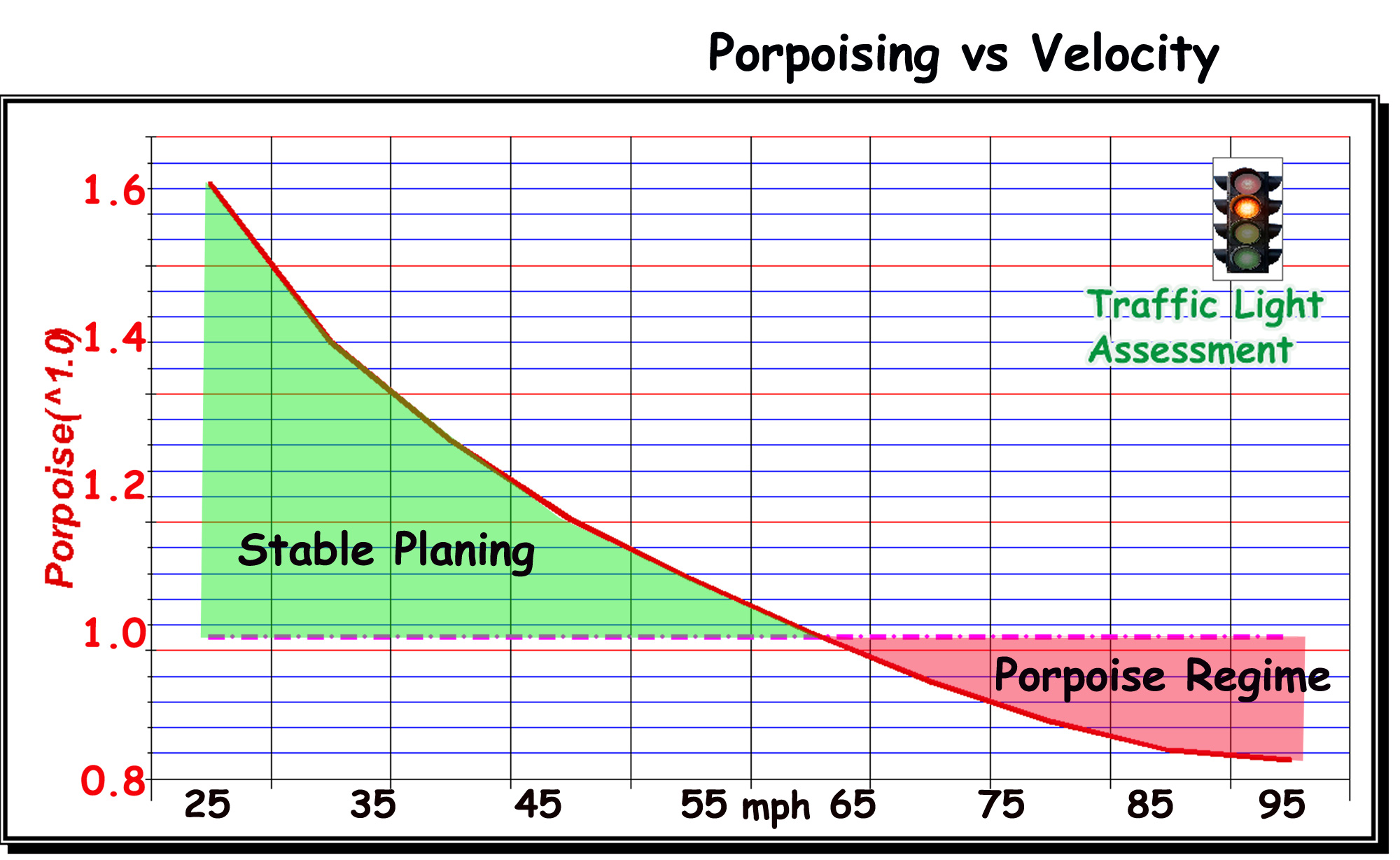
Figure 3 - Porpoise Stability analysis uses a hydrodynamic
prediction of the critical porpoise trim angle (CPA) combined
with analysis of restoring quality of the longitudinal force
balance and pitch stability margins through the velocity range. |
|
Porpoise Stability - XPorpoise is
an engineering tool developed by AR® that helps predict your
hull's inherent instabilities leading to porpoising. The
technique is based on a uniquely modified Stavitsky & Day/Haag
method of hydrodynamic prediction of the critical porpoise trim
angle (CPA) for various hull/setup configurations, velocities
and Lift characteristics.
This
is combined with analysis of restoring quality of the
longitudinal force balance and pitch stability margins through
the velocity range.
Porpoising onset occurs when the lift is
generated at a sufficiently high trim angle or sufficiently low
deadrise so as to cause a dynamically unstable loading on the
lifting surfaces. By analysis of a hull's design and performance
characteristics and comparison to the CPA at each velocity in
performance range, TBDP©/VBDP© predicts when the hull is
susceptible to porpoising and when it is performing in a stable
regime. Highly accurate for variable deadrise, multiple lifting
surfaces, and imbalanced surface loadings. [see
more on
Porpoising Stability analysis]
|
|
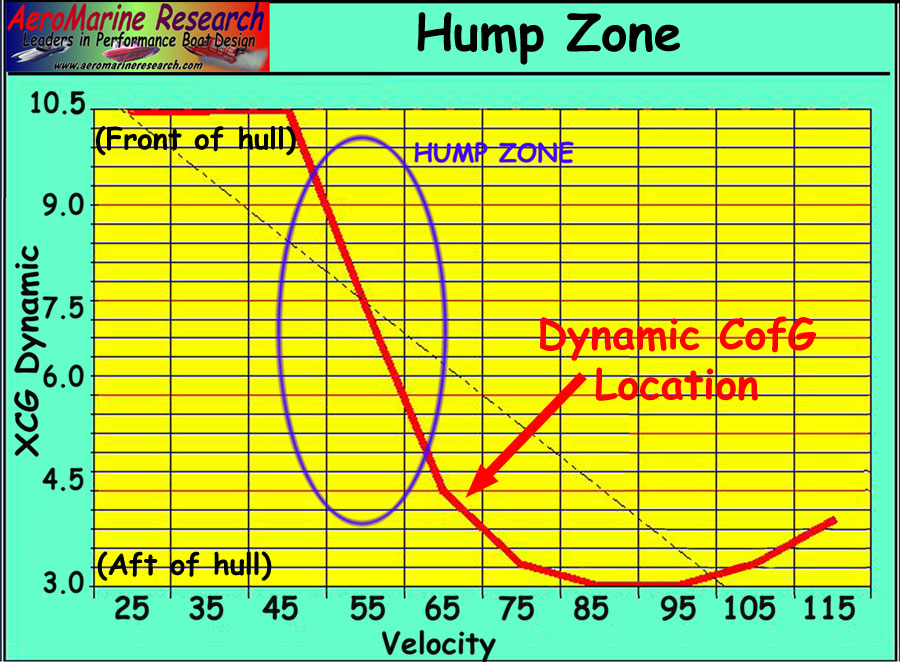
Figure 4 - The 'hump zone'
indicates the velocity region of inherent 'instability' due to a
significant transfer of Lift mechanism. |
|
Hump Zone Analysis - 'Hump Zone' exists on all
performance hulls, and can indicate a point of instability of
interest to performance optimization. The 'hump zone' marks the
velocity region of inherent 'instability' due to the significant
transfer of Lift mechanism.
This 'hump' or 'transition
zone' occurs on all performance boats, and intiates at a
different with each hull and setup. The change in location of
the center of Lift (with increasing velocity) is often quite
dramatic and can initiate the onset of potential instabilities -
like Porpoising or chinewalking. We have developed a
mathematical method to accurately predict the onset of
instability and the point of the 'Hump Zone Transition". [see
more on
Hump Zone analysis] |
|
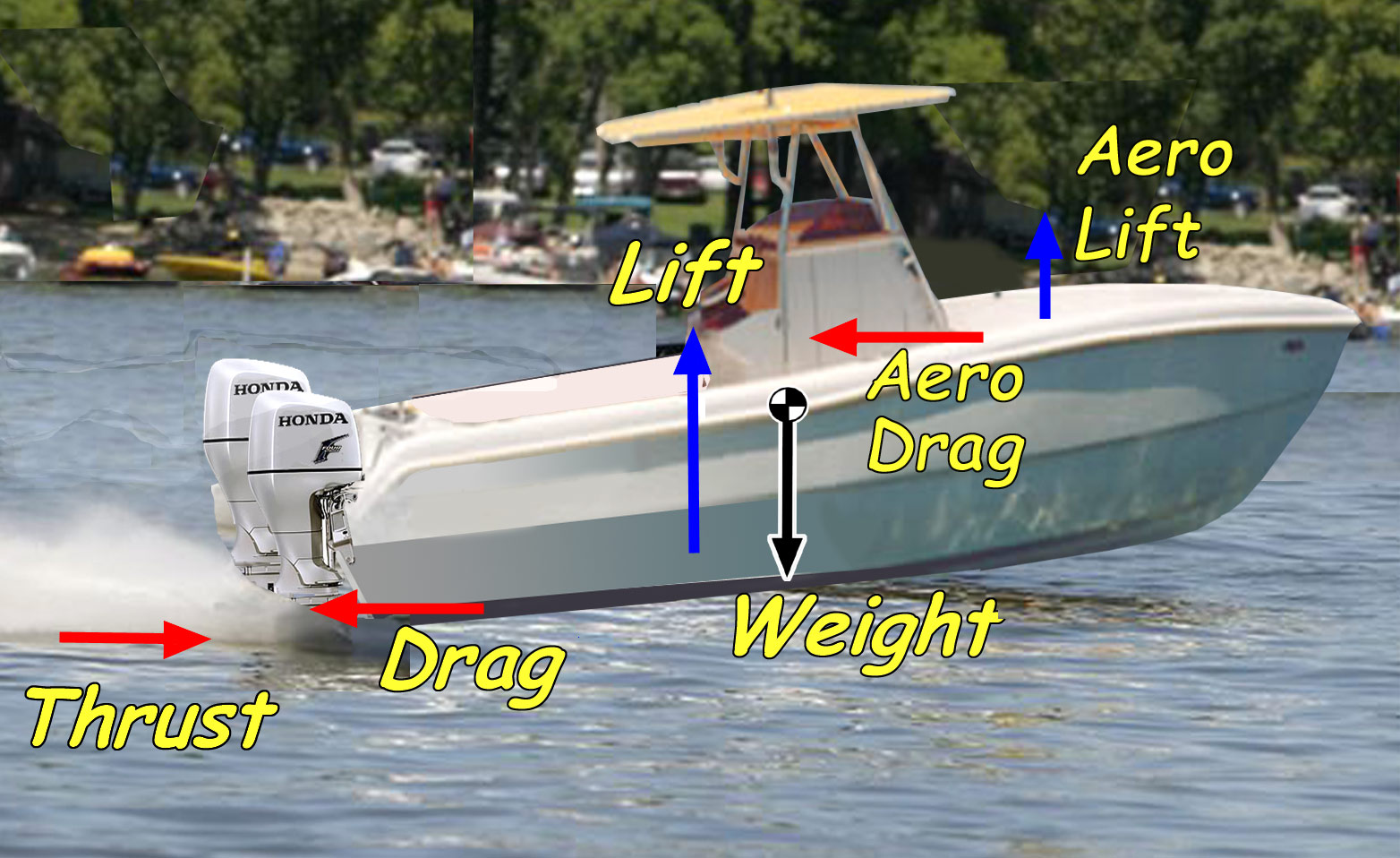
Figure 5 - Force-Moment is the total of all dynamic forces
acting on hull, acting about the static CG. Force-Moment changes in value and often
direction (BOW UP or BOW DOWN) through the tested Velocity
range.
|
|
Force-Moment Analysis - Force-Moment is
the total of all dynamic forces acting on hull, acting about
XCGStatic (location of static CG). The Force-Moment value
changes throughout the operating velocity range. Positive value
represents a BOW UP tendency, negative value means BOW DOWN
tendency.
For
example, a loss of power at a velocity with large BOW UP
Force-Moment can cause sudden nose-dive in hull stability;
whereas a loss of power at a velocity with large BOW DOWN
Force-Moment can cause a sudden aft-fall in hull stability with
possible trailing wave swamping.
Example, a rapid change
from BOW DOWN Force-Moment to a BOW UP Force-Moment represents a
change in the location of net dynamic forces and an increase in
hull instability. Under such conditions, an unplanned vertical
upward force (wind gust, vertical wave force) can cause a
further BOW UP motion and momentum bow-raising instability, including blow-over. |
|
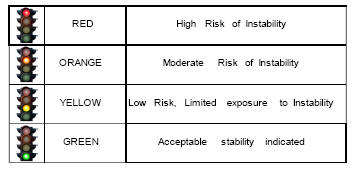 Figure
6 - All Stability Results are presented with a TRAFFIC LIGHT
indicator that gives the 'GOOD/NO GOOD' summary of all
instability conditions Figure
6 - All Stability Results are presented with a TRAFFIC LIGHT
indicator that gives the 'GOOD/NO GOOD' summary of all
instability conditions |
|
Evaluation Tools -
Dynamic Stability is not a scalar quantity, but rather it is an
emergent behaviour. Several behaviours and trends are analyzed
to accurately determine ‘when’ a hull can start to become
unstable. We examine absolute values of these indicators,
rate-of-change of the indicators, and local trending of the
indicator, toward identifying the real-world status of dynamic
stability. For each of the Stability measures,
TBDP©/VBDP© software does ALL the work behind the scenes, and
gives DETAILS and also displays the 'GOOD/NO GOOD' TRAFFIC LIGHT
indicator all considerations. [see more on
Easy Results Presentation]
Results Presentations: To make a quick
and easy evaluation of stability results, results include:
-
1)Detailed Results REPORT - presented in the 'Performance Results Wizard'
Report.
-
2)Results ASSSESSMENT - a brief,
direct statement of stability status is provided (eg: 'Moderate
Instability is indicated')
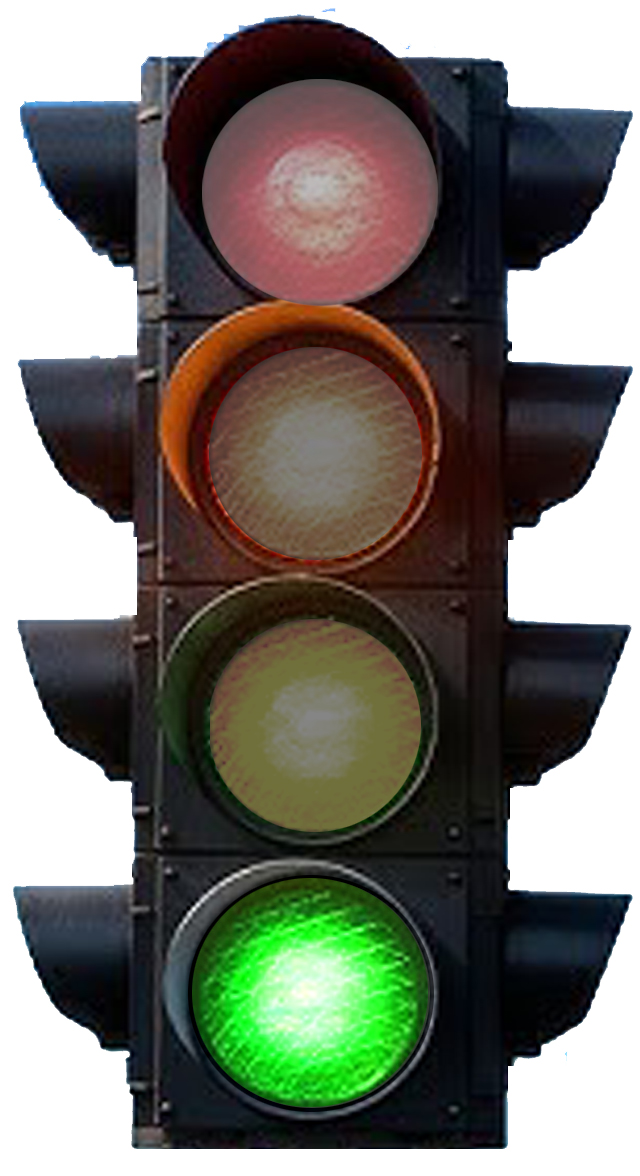 3)Traffic Light Assessment - Performance Graphs for the
stability analysis features are shown with a visual 'Traffic
Light' indicator displayed, based on the stability
assessment: 3)Traffic Light Assessment - Performance Graphs for the
stability analysis features are shown with a visual 'Traffic
Light' indicator displayed, based on the stability
assessment:
|
|
|
|
|
|
Research results now included in performance
analysis by TBDP©/VBDP©
[more
about AR's research
more about AR's publications and
technical
articles/papers]
|